Showing posts with label Advocacy. Show all posts

Sunday, April 3, 2022

Spreading the New Concept of Alternative Biome States (ABS) to Save Our Old Growth Grasslands

Old-growth grasslands are grass-dominated open biomes which are ancient (some are tens of millions of years old), have high endemism and diversity (they are more diverse than rainforests at some scales), and are slow to reassemble once they have been degraded (more than a millennium according to studies). This ecosystem is one of the most endangered in the world, and misguided efforts to fight climate change by mass tree plantings can only hasten their demise.  

One of the major impediments to the widespread acceptance of the concept of ancient grasslands among the general public is the outdated notion that there is only one natural climax community. This wrong idea that ecological succession is a ladder-like process and that closed canopy forests (e.g. rainforests) are the ultimate goal in nature is deeply entrenched in the public consciousness. It promotes the wrong notion that all grasslands are simply forests that are waiting to happen, and are thus exempt from our protection and conservation.

It must be replaced by the more accurate paradigm of Alternative Biome States (ABS).

African Tropical Grassland (Savanna), by Gossipguy)

What are Alternative Biome States?

New research has shown that open old growth grasslands are a natural alternative to dark shaded forests, and that they can maintain themselves without any human intervention over thousands and even tens of millions of years. Neither grasslands nor forests are the "ultimate" expression and final state of natural succession. Instead, an area whose climactic and soil characteristics can theoretically support both grasses and trees alternates between the two stable biome states depending on other, more local factors.

North American Temperate Grassland (Osage Plains Prairie in Missouri), by Pat Whalen
What local factors keep the two biomes stable over time?

Grasses have harnessed two local factors to help push back forests. Some species have evolved with natural fire, while other grass species have partnered with large herbivores (e.g. elephants, bovids like antelopes, buffaloes, bisons, etc). Both of these "allies" can kill or weaken trees, as well as tree seedlings and saplings. This keeps the grassy biomes sunlit and open, which is the optimum environment for many sun-loving members of the Poaceae.

On the other hand, the dark humid interior of forests is not a welcome environment for most grasses. C4 grasses in particular grow best under the wide open and sunlit skies, and the high humidity and lack of wind also helps keep grass-induced fires from penetrating the inhospitable interior of the forest.

These counteracting forces on both sides stabilize the alternative biomes and allow each one to flourish.

South American Tropical Grassland (Cerrado), by Eliane de Castro)
How are these biomes switched from one state to the other?

Although old growth grasslands and forests are naturally stable over potentially long periods of time, strong perturbations can be enough to tip them over to the alternative state. 

For example, one or two strong forest fires in a region plagued by drought could be enough to quickly turn a closed canopy forest to an open ecosystem, as fire-adapted grasses and other plants colonize the resulting gaps in the forest. This can create a strong feedback mechanism whereby the gaps are widened as the flammable vegetation contributes to more fires going forward, with large herbivores following the grasslands to help keep the trees out.

This scenario created the great savannas in Africa as early as 15 million years ago, when C4 grasses started pushing back the forests to create new and sunlit open landscapes. Evidence of the rise in grass-fueled fires during this period of grass expansion is etched in charcoal deposits, as well as in the phylogeny of savanna-living underground trees, whose lineages increased in response to the rise of the new open biome. It was also around this time when the ancestors of large iconic megafauna like antelopes and other mammalian herbivores radiated into many more species to fill the new ecosystem.
 
The opposite transition from forest to grassland is usually more gradual, but just as inevitable. If fire and mammalian herbivores are somehow excluded from open ecosystems in areas whose climate and soil can support both biomes, then trees will gradually shade out the grasses and other smaller sun-loving plants. 

African Tropical Grassland (Savanna), by Bjørn Christian Tørrissen
What can you do?

Champion and spread the new paradigm of Alternative Biome States (ABS) as a replacement for the outdated concept that ecological succession is a one directional process towards shaded closed canopy forests. The elevation of open ecosystems as a natural alternative to forests will help protect and conserve our ancient and biodiverse grasslands and the countless other plants and animals that live there.

North American Temperate Grassland (Konza Prairie in Kansas), by Jill Knutson Hauko
 References

Pausas JG, Bond WJ. Alternative Biome States in Terrestrial Ecosystems. Trends Plant Sci. 2020 Mar;25(3):250-263. doi: 10.1016/j.tplants.2019.11.003. Epub 2020 Jan 6. PMID: 31917105.

Tristan Charles-Dominique, T. Jonathan Davies, Gareth P. Hempson, Bezeng S. Bezeng, Barnabas H. Daru, Ronny M. Kabongo, Olivier Maurin, A. Muthama Muasya, Michelle van der Bank, and William J. Bond (2016). Spiny plants, mammal browsers, and the origin of African savannas. PNAS DOI: 10.1073/pnas.1607493113

Saturday, March 12, 2022

The Untold Story Of Grasses

A very nice video that advocates for the saving of old growth grasslands and opposition to the mindless planting of trees everywhere. I particularly like how the narrator mentions that grasslands drew animals out of the forest "to discover the joys of light, infinite food, and the space to see and flee from predators"...because this was probably how our ancestors felt when they themselves moved out of the forest and into the light.

Learn more about grasslands and forests: http://openecosystems.co.za

The story of the underdogs that took out their forest adversaries with powerful allies – fire and the great herds. Grasses created an open sunlit world, rich in plants and animals, including those that nurture and feed us and sustain our cities. Now all are threatened by a trillion trees. Most people don’t think about grass and dismiss ancient grasslands as mere empty space or degraded forests. The open sunlit habitats of half the world have been further neglected in the current tide of media promoting forests and tree planting as a quick fix for climate change. But grassy biomes have been carving a space in forests for millions of years. They created an alternative sunlit world, the inverse of forests – fire-loving and friendly to herds of herbivores. Ancient old-growth grasslands still exist today. Many are extraordinarily rich in plants and animals, which are restricted to their open, sunlit, grassy habitat. Grasslands have provided the world’s major seed crops, staple food for billions of people. Grassland animals were key to the development of our civilizations, providing transport, food and fiber. Global plans to plant billions of trees in vast areas could see the collapse of grasslands in the next decade. Our story was motivated by our concern for this impending disaster. This video gives voice to the sunlit, grassy world, calling for wisdom and understanding rather than policies driven by panic and ignorance.

Credits: Script by William Bond Narration by William Bond


Thursday, December 2, 2021

Ancient Old Growth Grasslands may be the Safest and Most Reliable Choice for Carbon Storage in the Fight against Climate Change

Osage Plains Prairie in Missouri, by Pat Whalen. To learn more about the importance of protecting original prairie in Missouri, and how you can get involved, please visit www.moprairie.org

The ability to sequester and store carbon in a manner that will reliably prevent it from pouring back into the atmosphere is essential in our fight to slow global warming and climate change.

Intact and ancient old growth grasslands are our best weapon in this fight in many parts of the world, due to several factors that allow it to more safely store carbon underground compared to forests and degraded secondary grasslands.

What are some factors in our changing climate that affect the reliability of carbon sequestration and storage?

There are two main factors that are increasingly being affected by climate change, and they are wildfires and drought. 

  • Climate change is increasing the frequency and/or severity of fire weather – which is defined as periods with a high fire risk due to a combination of high temperatures, low humidity, low rainfall and often high winds.

    This trend has been confirmed in many regions of the world, including Amazonia, southern Europe, Scandinavia, the Western USA and Canada, Siberia, and Australia. Paleo records have also confirmed the tendency of wildfires to occur during warmer periods of time  (Jones et al, 2020; Smith et al, 2020).

  • Climate change is increasing droughts and drought severity.

    The percentage of geographic areas affected by drought events has increased by approximately 1.74% per decade from 1950 to 2008, and this trend is projected to strengthen under global climate change with more intense droughts.  This will include significant decreases in terrestrial water storage (TWS) the sum of continental water stored in canopies, snow and ice, rivers, lakes, reservoirs, wetlands, soil, and groundwater, which is a critical component of the global water and energy budget (Gao et al, 2019; Shiru et al, 2020; Pokhrel et al, 2021).

What characteristics allow grasslands to sequester and store carbon more safely and reliably when compared to forests?

The increasing probability of drought and wildfires influences the ability of different ecosystems to reliably sequester and store carbon. Although primary forests are essential to our world and also need to be protected, misguided afforestation efforts that destroy ancient grasslands is on the rise, often with disastrous consequences (e.g. planting trees where they cannot survive, or even worse, creating invasive commercial monoculture plantations).

  • Grasslands store enormous amounts of carbon in soil.

    North American grasslands for example can store as much carbon in soil as tropical forests store as biomass. Since grasslands store most of this carbon biomass safely underground, they are less vulnerable to being released back into the atmosphere due to wildfires. In contrast, most tree biomass is above ground and vulnerable. Because of this, grasslands may be more reliable carbon sinks in a world with increasing probability of wildfires (Dass et al, 2018; Veldman et al, 2019; Qi et al, 2019). 

  • Grasslands are more resilient in the face of droughts compared to forests.

    Tree mortality is increasing rapidly due to heat stress and drought in many regions of the world, whereas shorter plants like grasses and shrubs tend to be more resilient, and this can cause forest collapse back to shrubs and grasslands as droughts increase in many parts of the world. Aboveground net productivity (ANPP) in grasslands is also more resilient than forests during long term droughts (McDowell and Allen, 2015; Lloret and Batllori, 2021; Zhang et al, 2021 ).

Why are ancient Old Growth Grasslands better than secondary degraded grasslands in our fight against climate change?

Ancient old growth grasslands store more carbon, are more resistant to fire and are richer in species than secondary grasslands. Grassland degradation led to average losses of 48 and 39% for Soil Organic Carbon  (SOC) and Soil Total Nitrogen (STN) stocks, respectively (Zaloumis & Bond, 2016; Jingjing et al, 2021)

Why do we need to emphasize the importance of ancient grasslands in our quest to mitigate climate change?

We need to continue to strongly advocate for the preservation of ancient old growth grasslands, not only because of their continued destruction at the hands of land developers, but also because of misguided afforestation efforts around the world. Many of these grasslands originated thousands and even millions of years ago, long before the rise of humanity. We owe it to the future to preserve them and the countless animals and plants that make it their home, and in the process help combat climate change.

Andropogon gerardii says "V for Victory!"

References and Literature Cited

Chang, J., Ciais, P., Gasser, T. et al. Climate warming from managed grasslands cancels the cooling effect of carbon sinks in sparsely grazed and natural grasslands. Nat Commun 12, 118 (2021). https://doi.org/10.1038/s41467-020-20406-7

Dass Pawlok, Benjamin Z Houlton, Yingping Wang, David Warlind. Grasslands may be more reliable carbon sinks than forests in California. Environmental Research Letters, 2018; 13 (7): 074027 DOI: 10.1088/1748-9326/aacb39

Gao Jiangbo,Linlin Zhang,Ze Tang,Shaohong Wu (2019). A synthesis of ecosystem aboveground productivity and its process variables under simulated drought stress. Journal of EcologyVolume 107, Issue 6 p. 2519-2531

Jackson, R., Banner, J., Jobbágy, E. et al. Ecosystem carbon loss with woody plant invasion of grasslands. Nature 418, 623–626 (2002). https://doi.org/10.1038/nature00910

Jingjing Yang, Xuefeng Wu, Ying Chen, Zhanbo Yang, Jushan Liu, Donghui Wu, Deli Wang, Combined attributes of soil nematode communities as indicators of grassland degradation, Ecological Indicators, 10.1016/j.ecolind.2021.108215, 131, (108215), (2021).

Jones, Matthew W., Adam Smith, Richard Betts, Josep G. Canadell, I. Colin Prentice, and Corinne Le Quéré. Climate Change Increases the Risk of Wildfires (2020). ScienceBrief, January 2020.

Lloret F., Batllori E. (2021) Climate-Induced Global Forest Shifts due to Heatwave-Drought. In: Canadell J.G., Jackson R.B. (eds) Ecosystem Collapse and Climate Change. Ecological Studies (Analysis and Synthesis), vol 241. Springer, Cham. https://doi.org/10.1007/978-3-030-71330-0_7

McDowell N G and Allen C D 2015 Darcy’s law predicts widespread forest mortality under climate warming Nat. Clim. Change 5 669–72

Pokhrel, Y., Felfelani, F., Satoh, Y. et al. Global terrestrial water storage and drought severity under climate change. Nat. Clim. Chang. 11, 226–233 (2021). https://doi.org/10.1038/s41558-020-00972-w

Shiru, M.S., Shahid, S., Dewan, A. et al. Projection of meteorological droughts in Nigeria during growing seasons under climate change scenarios. Sci Rep 10, 10107 (2020). https://doi.org/10.1038/s41598-020-67146-8

Smith, Adam J. P. , Matthew W. Jones, John T. Abatzoglou, Josep G. Canadell, Richard A. Betts (2020). Climate Change Increases the Risk of Wildfires. ScienceBrief, September 2020 Update.

Yulin Qi, Wei Wei, Cungen Chen, Liding Chen (2019). Plant root-shoot biomass allocation over diverse biomes: A global synthesis, Global Ecology and Conservation, Volume 18, e00606,ISSN 2351-9894,https://doi.org/10.1016/j.gecco.2019.e00606.

Veldman, Joseph & Aleman, Julie & Alvarado, Swanni & Anderson, Todd & Archibald, Sally & Bond, William & Boutton, Thomas & Buchmann, Nina & Buisson, Elise & Canadell, Josep & Dechoum, Michele & Díaz-Toribio, Milton & Durigan, Giselda & Ewel, John & Fernandes, G. & Fidelis, Alessandra & Fleischman, Forrest & Good, Stephen & Griffith, Daniel & Zaloumis, Nicholas. (2019). Comment on “The global tree restoration potential”. Science. 366. eaay7976. 10.1126/science.aay7976.

Susan E. Ward,Simon M. Smart,Helen Quirk,Jerry R. B. Tallowin,Simon R. Mortimer,Robert S. Shiel,Andrew Wilby,Richard D. Bardgett.Legacy effects of grassland management on soil carbon to depth. Global Change BiologyVolume 22, Issue 8 p. 2929-2938

Yizhou Zhuang, Rong Fu, Benjamin D. Santer, Robert E. Dickinson, Alex Hall. Quantifying contributions of natural variability and anthropogenic forcings on increased fire weather risk over the western United States. Proceedings of the National Academy of Sciences, 2021; 118 (45): e2111875118 DOI: 10.1073/pnas.2111875118

Zaloumis, N.P. & Bond, W.J. (2016). Reforestation or conservation? The attributes of old growth grasslands in South Africa. Philosophical Transitions of the Royal Society B, vol. 371, 20150310. https://doi.org/10.1098/rstb.2015.0310

Zhang Linlin , Jiangbo Gao, Ze Tang, Kewei Jiao (2021) Quantifying the ecosystem vulnerability to drought based on data integration and processes coupling, Agricultural and Forest Meteorology Volumes 301–302, 108354, ISSN 0168-1923, https://doi.org/10.1016/j.agrformet.2021.108354.

Monday, November 8, 2021

How Lawns Might Affect the Perception of Prairies

Many Americans hate lawns, for various reasons. 

Perhaps their belief is based on the notion that lawns are bad for the environment, whether it's because of the chemical runoff inevitably created by their maintenance, the inordinate waste of water to sustain them, or the lack of biodiversity and havens for pollinators. But many other people, perhaps the majority, are either supportive of lawns, or at least apathetic to the social and even legal requirements that homes should maintain a cut clean lawn on their front yards.

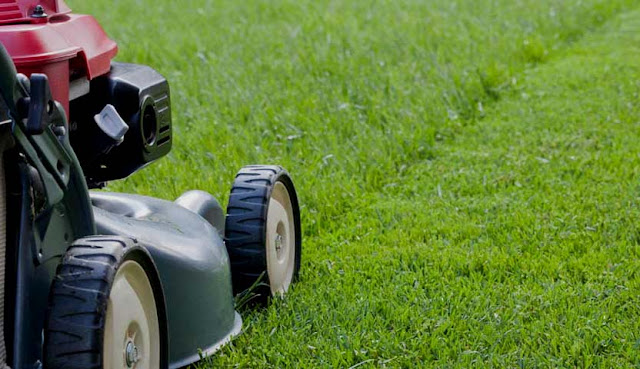
I've sometimes wondered whether such viewpoints could be a factor in the way this one segment of society might view prairies. In this case, lawns may have a negative impact because the ideal and perfect lawn in their minds is the complete antithesis of a prairie. Lawns are  basically  human-maintained prairies where all the multitudes of plant and animal species have been stripped away and discarded, leaving behind just a few desirable grasses.

When they see a prairie, this notion of an idealized lawn could (even if subconsciously) blind them to the truth. Instead of seeing the amazing biological diversity contributed by the many forbs and other plants, they see "weeds"; instead of marveling at the animals that make the prairie their home and add to the wonderful complexity of food webs, they see "pests"; and instead of being awed by the tall grasses they see an unmown landscape.

What a tragedy, if this is the case!

Tuesday, October 26, 2021

The Fight to Create a New Paradigm of Old Growth Grasslands


An updated version of this post is in the Missouri Prairie Journal (pdf)

The recent fight to save a remnant Prairie called Bell Bowl Prairie in Illinois has driven home (again) the precarious state of the world's ancient and pristine grasslands.

One major factor in the lack of focus about the dangers to this biome (as opposed to, for example, the rainforests) is the fact that many people still cling to the view that grasslands are simply a transitional or 'arrested' state towards becoming a forest. The belief that grasslands are low diversity, degraded land that had once been forests, or are "empty" land that could be used for something better, is one that has repeatedly been used to justify the destruction of this biome in history.

However, there has been a recent push by grassland researchers and proponents to combat this perception by pushing the notion of the so-called "Old Growth Grasslands", which is comparable to the traditional "Old Growth Forests".

What are Old Growth Grasslands?

The term Old Growth Grasslands (OGG) is relatively new, and refers specifically to grasslands that are characterized by having:
  • Ancient history and heritage, as opposed to being so-called secondary grasslands that just recently arose from human degraded forest or other land. For example, the plant lineages making up the Cerrado in South America started assembling almost 10 million years ago, long before our species even evolved.
  • High biodiversity compared to secondary grasslands. In fact, some old growth grasslands boast the highest plant species diversity in the world.
  • Very slow rate of recovery when destroyed due to agriculture, plantation forestry, and other human activities.  An Old Growth Grassland may take centuries and even millennia (projected 1400 years!) to recover its former species richness when it has been degraded to secondary grassland.
The term '"Old Growth" is made synonymous with words like ancient, intact, native, natural, pristine, reference, remnant, semi-natural, and undisturbed.

What is the problem?

There is a widespread perception among people that grasslands (including OGG) are simply degraded forests whose successional development has been arrested by disturbances such as fire and herbivory. 

Policies to combat climate change and protect biodiversity have often ignored the protection of these ancient grasslands, and in many cases have actually caused their destruction via deliberate tree-planting on pristine grasslands (afforestation)

What is the goal?

We must help change the widespread perception that old growth grasslands are simply degraded forested areas and a mere transitional stage towards becoming forests. This change in viewpoint will hopefully give this ancient biome a value and protection equal to rainforests and other old growth forests.

What is happening to Old Growth Grasslands?

The old growth grasslands have been and are still one of the most threatened ecosystems in the world, and in fact we have lost and are losing ancient grasslands at a pace that is significantly more rapid than loss of forests.

A few examples:

The majority of old growth grasslands in the USA has been lost, and only isolated remnants remain. For example, up to 99% of all Tall Grass Prairies in the country is gone, and only isolated remnants remain. Other grassland types are not faring well either. In one year alone (2018-2019), the Great Plains lost 1.1 million hectares, which is an area greater than Yellowstone National Park.

Half of the Brazilian Cerrado has already been cleared for agriculture expansion, and up to a million hectares is cleared each year. This is the equivalent of wiping out an area the size of New York City every month!

More than half the Pampas of South America have been lost to agriculture and cattle breeding. The remaining 50 million hectares of these grasslands are still being decimated, and are home to 540 recorded wild bird species, 12 of which are globally threatened.

The recent trend of planting trees to combat climate change has also caused widespread problems, when trees (and especially weedy invasive species) are planted in pristine grasslands ("afforestation") instead of degraded areas. 

Why must we fight for Old Growth Grasslands?

1. The old growth grasslands are the most biodiverse environments in the world at many scales.

For example, a mountain grassland in Argentina had an absolutely amazing 89 vascular plant species packed into a single square meter, a more diverse plant assemblage than one can see even in rainforests. 

Old growth grasslands are also significantly more diverse than secondary grasslands, having around 37% more species on the whole. When this diversity is degraded, it takes centuries or millennia (projected)  for the OGG to reassemble as diverse a community.

2. Old growth grasslands provide a home for innumerable species of animals. The destruction of old growth grasslands affects all the animals that depend on this habitat. 

For example, the total population of grassland birds in North America has dropped an astonishing 40% since 1966. One-third of all grassland bird species are on the Watch List due to steeply declining populations and threats to habitat. Birds that breed in the Great Plains of Canada and the U.S. and winter in Mexico’s Chihuahuan grasslands are experiencing exceptionally steep declines, a nearly 70% loss since 1970. Other temperate grassland birds have declined by 33% in that time.

Old growth grasslands also support numerous rare and endemic species. For example, the savannas of the South American Cerrado support 4,800 endemic plant and vertebrate species, all of which could be threatened by the continued decimation of this biome.

3. Grasslands play an essential role in combatting climate change. 

Grasslands store approximately 34 percent of the global stock of carbon in terrestrial ecosystems while forests store approximately 39 percent and agroecosystems approximately 17 percent. 

Some studies have shown that grasslands are an even more reliable carbon sink than forests, and although grasses account for only 3% of plant species on Earth, grass-dominated landscapes contribute 33% of global primary productivity, the amount of CO2 removed from the atmosphere every year to fuel photosynthesis.

4. Grasslands collect freshwater for most of the largest rivers of the world. 

For example, the Cerrado in Brazil delivers 40% of all the freshwater in that country! 

5. Possible conversion to secondary grasslands.

The loss of old growth grasslands due to conversion to human agricultural use or due to misguided attempts at afforestation frequently results in the rise of secondary grasslands in their place. Such secondary grasslands are less diverse and usually very fire prone (which creates new dangers to human communities and forests). For example, one major factor in the recent huge and destructive fires in the West Coast of the USA is the proliferation of invasive annual grasses, which have supplanted the perennial grasses and shrubs after degradation of the land due to over-grazing.

What can you do?

Champion and spread the concept of Ancient or Old Growth Grasslands, which are separate from secondary grasslands, and are equally as old and biodiverse and worthy of protection as Old Growth Forests.

References

Bardgett, R.D., Bullock, J.M., Lavorel, S. et al. Combatting global grassland degradation. Nat Rev Earth Environ 2, 720–735 (2021). https://doi.org/10.1038/s43017-021-00207-2

Beer, C., Reichstein, M., Tomelleri, E., Ciais, P., Jung, M., Carvalhais, N., Rodenbeck, C., Arain, M. A., Baldocchi, D., Bonan, G. B., Bondeau, A., Cescatti, A., Lasslop, G., Lindroth, A., Lomas, M., Luyssaert, S., Margolis, H., Oleson, K. W., Roupsard, O., Veenendaal, E., Viovy, N., Williams, C., Woodward, F. I. & Papale, D. (2010). Terrestrial gross carbon dioxide uptake: global distribution and covariation with climate. Science 329,
834–838

Colli, G.R., Vieira, C.R. & Dianese, J.C. Biodiversity and conservation of the Cerrado: recent advances and old challenges. Biodivers Conserv 29, 1465–1475 (2020). https://doi.org/10.1007/s10531-020-01967-x

Comer, P. J., J. C. Hak, K. Kindscher, E. Muldavin, and J. Singhurst (2018). Continent-Scale Landscape Conservation Design for Temperate Grasslands of the Great Plains and Chihuahuan Desert. Natural Areas Journal 38:196–211.

Dass Pawlok, Benjamin Z Houlton, Yingping Wang, David Warlind. Grasslands may be more reliable carbon sinks than forests in California. Environmental Research Letters, 2018; 13 (7): 074027 DOI: 10.1088/1748-9326/aacb39

Intergovernmental Panel on Climate Change (IPCC), August 2019. The Special Report on Climate Change and Land (SRCCL), a special report on climate change, desertification, land degradation, sustainable land management, food security, and greenhouse gas fluxes in terrestrial ecosystems.

Murray S, M. Rohweder, R. White (2000). Pilot Analysis of Global Ecosystems : Grasslands Ecosystems.

Nerlekar, Ashish & Veldman, Joseph. (2020). High plant diversity and slow assembly of old-growth grasslands. Proceedings of the National Academy of Sciences. 117. 201922266. 10.1073/pnas.1922266117. 

Simon Marcelo F., Rosaura Grether, Luciano P. de Queiroz, Cynthia Skema, R. Toby Pennington, Colin E. Hughes (2009). Recent assembly of the Cerrado, a neotropical plant diversity hotspot, by in situ evolution of adaptations to fire. Proceedings of the National Academy of Sciences Dec 2009, 106 (48) 20359-20364; DOI: 10.1073/pnas.0903410106

Veldman, Joseph W. “Clarifying the confusion: old-growth savannahs and tropical ecosystem degradation.” Philosophical transactions of the Royal Society of London. Series B, Biological sciences vol. 371,1703 (2016): 20150306. doi:10.1098/rstb.2015.0306

Wilsey, CB, J Grand, J Wu, N Michel, J Grogan-Brown, B Trusty (2019). North American Grasslands. National Audubon Society, New York, New York, USA

Wilson, J. Bastow; Peet, Robert K.; Dengler, Jürgen; Pärtel, Meelis (1 August 2012). "Plant species richness: the world records". Journal of Vegetation Science. 23 (4): 796–802.

World Wildlife Fun. (2021).  PlowPrint Report 2021