Showing posts with label Biodiversity. Show all posts

Tuesday, October 5, 2021

What is the most bio diverse place on the planet Earth?

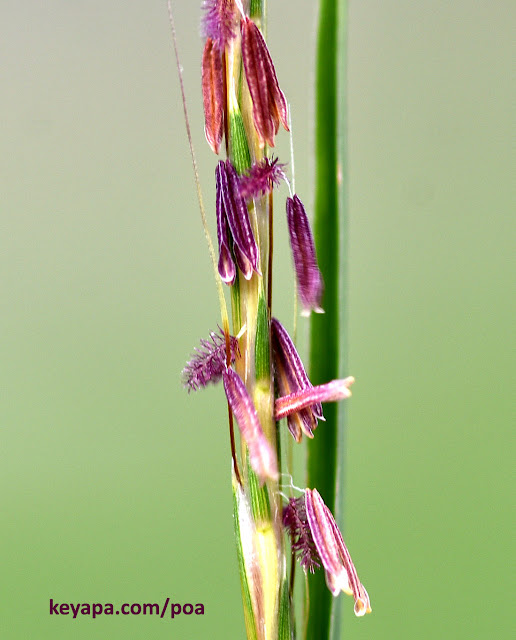
The grass Cenchrus setaceus (Pennisetum setaceum) spikelets

If you ask people which place in the world has the most species in a given area, many of them would probably pick the tropical rainforests.

The concept of the tropical rainforests as being the most diverse ecological environment on Earth has been drummed into us continuously by popular culture, but it turns out that answer is only partially correct.
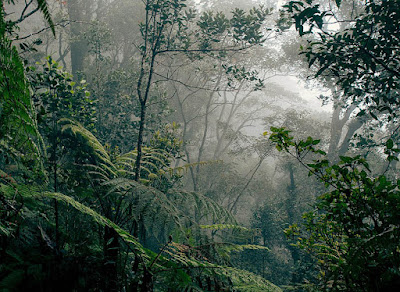
By Dukeabruzzi - Own work, CC BY-SA 4.0

When researchers counted the number of vascular plant species in different environments around the world, they discovered that the answer to that question depends on how large an area you consider when counting (Wilson et al, 2012).

The most diverse environment in the world when you look at an area greater than 100 m2 is indeed the tropical rainforest. For example, a tropical rainforest in Ecuador had 942 species of vascular plants living in 1 hectare (10,000 m2) of land.

But when you look at smaller areas, the answer turns out to be different. When they counted the number of species of vascular plants in an area smaller than 100 m2, they found out that the most diverse environments are actually temperate grasslands. For example, a mountain grassland in Argentina had an absolutely amazing 89 vascular plant species packed into a single square meter (click table below)! 

I'll admit that actually blew my mind because I can't imagine fitting almost 100 plant species (not individual plants, but different species!) into an area only half the size of a small twin bed.
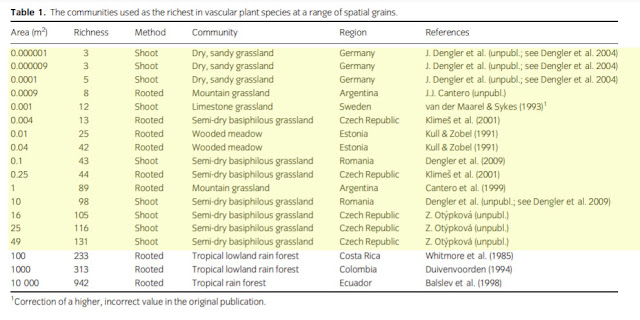
(Wilson et al, 2012)

But the even more amazing thing is that a new study seems to indicate that researchers may be undercounting the total number of species in grasslands if they only look at aboveground structures, and that total species richness could be up to 65% higher (Rucinska et al, 2021).

In the end, the studies indicate grasslands were the most diverse environments at all the smaller scales that the researchers examined, and it and the tropical rainforests can thus be doubly crowned the most biodiverse places on planet Earth.

Given this fact, my hope is that people come to realize that our ancient and "old growth" grasslands can be just as diverse and species rich as rainforests, and must therefore be just as cherished and protected.

Spikelets of the native grass Little Bluestem (Schizachyrium scoparium)

References:

Anna Rucinska, Sebastian Swierszcz, Marcin Nobis, Szymon Zubek, Maja Boczkowska, Marcin Olszak, Jan G. Kosinski, Sylwia Nowak, Arkadiusz Nowak (2021).
Is it possible to understand a book missing a quarter of the letters? Unveiling the belowground species richness of grasslands. Agriculture, Ecosystems & Environment, 2021, 107683, ISSN 0167-8809


Wilson, J. Bastow; Peet, Robert K.; Dengler, Jürgen; Pärtel, Meelis (1 August 2012). "Plant species richness: the world records". Journal of Vegetation Science. 23 (4): 796–802.


Saturday, January 30, 2021

Barreling Towards Extinction: Plant Families in Peril

It's no secret that there are many endangered species among plants, but I was still surprised at how many are threatened by habitat destruction, invasion, and other anthropogenic factors. 

The International Union for Conservation of Nature (IUCN) is the global authority on the status of the natural world and the measures needed to safeguard it. This organization maintains a publicly accessible database of species which have been evaluated called The Red List, which you can view here. 

In this database, they have categorized species based on several criteria and grouped them according to their risk of extinction. For those species where enough data is available, the categories include:

  • Least Concern - species have been evaluated against the red list criteria and are not threatened or extinct
  • Vulnerable - species have been evaluated with the best data possible and are at high risk of extinction in the wild.
  • Endangered - species have been evaluated with the best data possible and are at very high risk of extinction in the wild. 
  • Critically Endangered - species have been evaluated with the best data possible and are at an extremely high risk of extinction in the wild. 
  • Total Threatened - a sum of the species in the Vulnerable, Endangered, and Critically Endangered lists.

I was reading about an endangered grass  in California, and this prompted me to see how many grass species are lumped into this bucket. So I took a look at the absolute numbers of grass species in the Red List database, subtracted those species which have not been fully evaluated (a grouping called  Data Deficient in the IUCN), and calculated percentages for each of the categories listed above.

It turns out that a bit more than 20% of the Poaceae species in the database that have adequate information are Threatened, which was a number that seemed a bit high to me.

But imagine my surprise when I decided to look at other plant families.

More than 50% of the species in the Orchid, Daisy, Palm, and Cycad taxa are Threatened, with the Aroids coming up to that percentage as well (45%). Indeed, an amazing 63% of Cycads are in the Threatened category! These are shocking numbers to me, and they shine a light on the need for more action in terms of preserving our plant biodiversity.

But before you go into full panic mode, it should be noted that there are caveats to the numbers calculated above.

1. The total number of species listed for many of the taxa in the Red List database is only a subset of the actual number of species in the world.

For example, although the estimated total species in the family Orchidaceae is around 30,000, only around 1400 are listed in the Red List with enough data to make a judgement call on their status (approx. 5%). In the case of the Araceae, only around 7% of the 3700 species worldwide have been fully evaluated, although almost half of that 260 species of Aroids are listed as Threatened.

However, balancing this is the fact that in some taxa, most of the species are already included in the database. For example, it seems almost ALL 300+ species of Cycads in the world are already listed in the Red List, which means these plants are really in dire straits, given that more than 60% are Threatened.

2. There might be a slight bias in the species included in the database towards those that are in peril already. That is, researchers might tend to focus on plants that they believe are in trouble when there are very large numbers of species in the world.

Thus, as more information is gleaned and more species are entered into the database, it is expected that the percentage of  Threatened species will drop lower.

Nevertheless, such data serves as a warning to us to be ever vigilant in protecting our plant biodiversity.