Showing posts with label Saccharum. Show all posts

Saturday, January 13, 2024

Celebrating in a new and better website

I've been busy with life this past holiday month, and have been working on some writing, including a new article about the awesomely quirky Orcutt grasses for a magazine, but I'll be moving the website to my own server starting this February.

It's been great here in googleland, but I want better control of the site and the only way to do that is to migrate it to something that I can fully control.

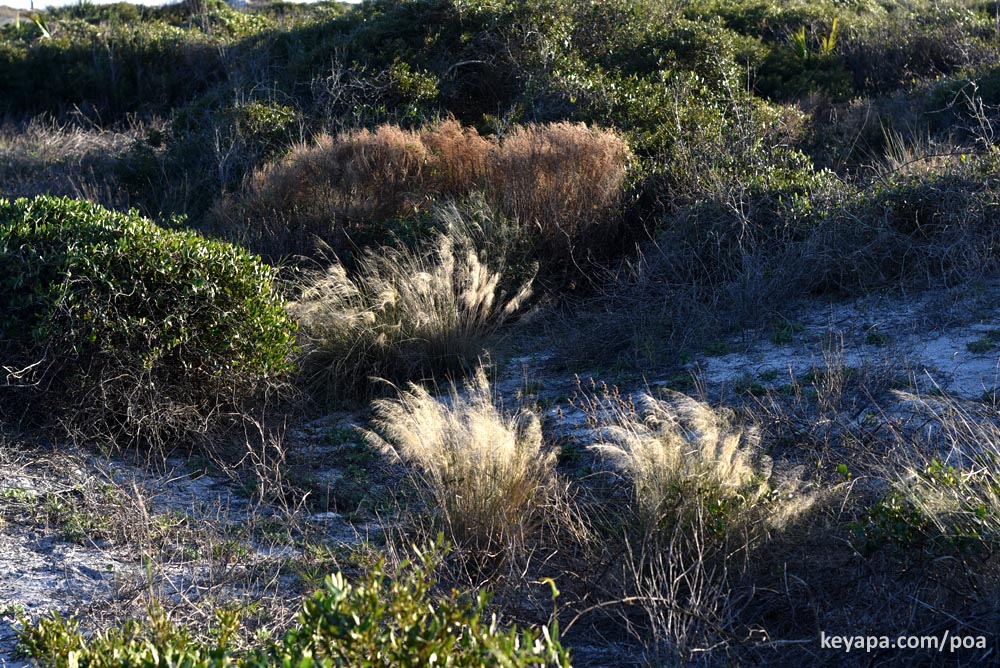
After awhile, perhaps the new site will eclipse this old version, much like the newest invader in Florida above (Saccharum spontaneum) has started to overshadow the less showy Cenchrus purpureus (with the yellowish inflorescence in the background and foreground). 

I will certainly try my best to continue to celebrate the grasses and the amazing ecosystems that they create, and I will always push forward the idea that sharing information about their value is one of the best ways to preserve these ecosystems. Knowledge is power, as they say.

More information later.

Note: Wild sugarcane (S. spontaneum) is a very tall (3-4 meters) dominant species in grasslands in Asia (I have seen them a lot in the Philippines for example), and has recently been officially declared present in the United States (in Florida). The picture above was taken in Lake Okeechobee, FL.

Tuesday, October 10, 2023

Grasses all day, every day, and grasses ever after, amen!

My life, as well as the lives of billions of other people, are intertwined with grasses...we are touched by them....from the time we wake up in the morning, to the time we sleep at night.

This was what I tried to convey during a talk with Matt Candelas of In Defense of Plants.

In my case, when I wake up in the morning, I (like literally billions of other people around the world) encounter members of the grass family, or derivatives of it, throughout the day.

The first thing I do in the morning is eat a bowl of oatmeal, and oatmeal of course is from the grass Avena sativa. 

When I eat my bowl of oatmeal, I put  some sugar into the mix of fruits, and around 80% of sugar in the world is derived from a grass, sugarcane (Saccharum officinarum).

I walk out to my car, and I'll see suburban lawns stretching to the horizon, and the turf grass of course is a mix of various grass species. In Florida it would be Stenotaphrum secundatum (St. Augustine grass), Paspalum notatum (Bahia grass) and maybe Cynodon dactylon (Bermuda grass), while in the Northeast you get various mixes of Poa pratensis (Kentucky bluegrass), Festuca spp, and Lolium spp.

Such species are what people normally think of when you mention the word "grass" to them. Ornamental grasses also fall into this category of grasses that are used in landscaping.

When I drive my car to work, the ethanol in my gasoline tank is likely as not made from Zea mays. In fact, around 40% of all corn production is used as bioethanol!

During lunch, I might go out and get a burger, and where would that be without the bread that frames the delicious ingredients between them? Bread of course is from a grass that we call wheat,  (Triticum aestivum and its ilk).

Maybe I also eat some snacks for lunch, and if you are brave enough to look at the ingredients of your candy or chips, you'll probably find something called high fructose corn syrup in it. This is a very common ingredient of packaged foods, because it adds to the sweetness of the food, and this is of course derived from a grass that we already mentioned above, Zea mays (corn/maize).


In fact, if you live in the USA, your body is probably mostly derived from that single grass species. Here is a great documentary that explores in some depth the ubiquity of Z. mays in American life.  

Finally, during some part of the day, I'll probably eat rice (Oryza sativa) during either lunch or dinner (and sometimes breakfast too!). Rice is, of course, one of those grasses that have been essential in the creation and and molding of entire civilizations (which I'll look into next time).


And I'm not even including all the times we use bamboo implements and tools!

So no matter how you look at it, the family Poaceae is by far the most influential and important plant family in the world. It's grasses all day, every day, and grasses ever after, amen!

Wednesday, May 17, 2023

The Viking Syndrome: Why Grasslands (and Grasses) Became Wildly Successful

The open spaces, the open grasslands. Nothing could be better.

The overwhelming success of the Poaceae is not simply because of their well known habit of growing from the base, unlike many other plants. It is also because they exhibit traits that when taken together, researchers have termed the "Viking Syndrome", in honor of the ancient group that ranged far and wide, colonized many places, and had profound effects in areas where they landed.

One of the grasses I saw as I first stepped into the streets of Lima, Peru last month was a species that I had seen many times in many different places. There was no mistaking the distinctive digitate inflorescence, nor the wiry stoloniferous habit that was one factor that allowed the grass to become a fearsome competitor and so valuable to turf grass managers. I had seen the same species in New Jersey, in Florida, in several Caribbean Islands, and even in the Philippines. It was the common Cynodon dactylon (called Bermuda grass in the USA), and its success is one that is repeated time and time again in the Poaceae.

Cynodon dactylon in Peru
The discovery of this species in Peru was not even a surprise to me, because I have grown accustomed to seeing grass species that are extremely cosmopolitan in their distribution.

In an earlier article, I had summarized some of the reasons why grasses can be considered the most successful plant family in the world, even not taking into account their economic importance to humanity (e.g. rice, wheat, maize/corn, etc). 

Grasses are only the fifth most species-rich angiosperm family with about 12,000 species (Clayton et al., 2015). And yet ecologically, grasses are by far the most dominant plant family. Areas dominated by grasses cover up to 43% of the surface of the world (Gibson, 2009), and they are found in almost every ecological habitat, including Antarctica. Up to 37% of the land area of the USA is dominated by grasses! Entire ecosystems of animals and other plants depend on grasses for their continued health and existence.

In fact, although grasses account for only 3% of plant species on Earth, grass-dominated landscapes contribute 33% of global primary productivity, the amount of CO2 removed from the atmosphere every year to fuel photosynthesis (Beer et al., 2010).

The overwhelming success of the Poaceae is not simply because of their well known habit of growing from the base, unlike many other plants. It is also because they exhibit a suite of invasive traits that when taken together, researchers have termed the "Viking Syndrome," in honor of the ancient group that ranged far and wide, colonized many places, and had profound effects in areas where they landed (Linder et al, 2018). 

Specifically, grasses have:
  1. Efficient dispersal, 
  2. Rapid population growth, 
  3. Environmental flexibility 
  4. Flexible growth forms and phenotypic plasticity
  5. The ability to transform environments to benefit themselves
It is this combination of invasive traits that have allowed grasses to become the most successful plant family in the world today.

1. Efficient Dispersal

Grasses certainly are able to disperse far and wide. The method of dispersal after pollination varies among species, but include wind dispersal (anemochory), dispersal via animal coats
(epizoochory), and dispersal after ingestion by an animal (endozoochory). The ability of grass species to be efficiently dispersed is almost everywhere in evidence. 

For example, the dune grass Leymus arenarius was one of only 4 plants to appear during the first decade after the formation of the volcanic island of Surtsey in 1963 (Magnusson et al, 2014). Some grass species like Phragmites australis are also hailed as being perhaps the most widely distributed angiosperm in the world, with a range that extends from 70 degrees N to the tropics (Holm et al, 1977). 

The unit of dispersal is the inflorescence in whole or part. This "diaspore" includes the basic unit of the grass flowers, which are the spikelets. In many grasses these are frequently tiny and lend themselves to easy dispersal, but beyond that grass spikelets can show various modifications that enable them to be carried far and wide. The most common have long awns that help in wind dispersal, but some Cenchrus spp have sharp barbed "thorns" that can easily catch on animal fur or clothing.

The deadly spines of Cenchrus sp

In some others like Oplismenus undulatifolius the awns exude sticky droplets of liquid which can also adhere to passing traffic. Studies have found that a dog running through this grass could pick up 12000 or more seeds on its fur! People are also used as vehicles for dispersal, with one study showing that around 800 seeds adhered to fleece within 30 seconds, while even denim pulled in around 300 seeds within the same timespan (Beauchamp et al, 2013)!

The sticky awns of Oplismenus undulatifolius helps in its dispersaL

2. Rapid Population Growth

The ability to create enormous populations very quickly might be another trait that helps in their invasive success. Such rapid population growth can be the result of shorter generation times and early reproduction. This allows pioneer populations in new habitats to quickly overrun the area, and the shorter generation times also creates more rapid responses to directional selection.

Although no definitive study has been made to compare entire plant families, many grasses have extremely short generations times. For example, the weedy and cosmopolitan Poa annua can flower just six weeks after germination (Cope et al, 2009) . In the same way, the weedy and extremely invasive Bromus tectorum (called cheatgrass in the USA) also can flower within 5 weeks (Meyer et al, 2004).

Interestingly enough, the grass embryo might be one factor that contributes to their reproductive success. Unlike other plants in their order (the Poales), which consist of undifferentiated cells, the embryos of grasses is already differentiated into specialized tissues, including the root, a shoot with leaf initials, and a specialized structure called the scutellum, which digests endosperm and moves it to the rest of the embryo. 

Bromus tectorum can flower within 5 weeks of germination 

3. Environmental Flexibility

The Poaceae as a whole occupy all the environmental niches available to angiosperms. This ability is related to the amazing flexibility of the grasses when it comes to adapting to various environments.

For example, grasses have the ability to survive in the widest range of temperatures among plants, with Deschampsia antartica able to live down to -10 degrees C (with an optimum of 10 degrees), and Dichanthelium thermale able to tolerate up to 65 degrees C in the active geothermal areas of Yellowstone National Park. The evolution of freezing tolerance in the family in particular opened up vast areas of the colder parts of the world to colonization by the grasses.

Another example of the ability of members of the Poaceae to exist in extreme environments is the large number of halophytes in the family. Halophytes are organisms that are very tolerant of high salt concentrations, and the grass family is second only to the Amaranthaceae in the number of species that are halophytes (Moray et al, 2015), with studies indicating that salt tolerance evolved independently at least 70 times in the family (Bennett et al, 2013).

This ability to flourish in a wide range of environments is founded on various traits. As an example, the Poaceae exhibits all 3 different types of photosynthesis (C3, C4, and CAM), an attribute it shares with only 8 other plant families. Since the the type of photosynthesis used by a plant greatly influences where it grows best, this means the Poaceae is capable of existing in innumerable and varied environments. 

The Poaceae also have a strong propensity to readily absorb novel genetic information from  their environment, and incorporate them into their own genome (Hibdige et al, 2021). They do this via a process called Lateral Gene Transfer (LGT), where a species can acquire new adaptive genes and traits from completely different species without any sexual reproduction. Such instances of LGT are an amazing way for a grass to "leap frog" the slower evolutionary pathways and suddenly acquire traits that allow them to survive in extreme and varied environments.

Muhlenbergia capillaris is a salt tolerant dune grass

4. Flexible growth forms and phenotypic plasticity

Grasses have evolved  a variety of growth forms that allow them to adapt to almost any situation or event, whether it be (a) continuous defoliation, such as by herbivores, (b) periodic defoliation, such as in seasonal climates, or (c) competition against other plants such as in forests.

In terms of vertical reach, most grasses are low lying organisms, but some species are tall, and form towering grasslands that reach high above the height of a man (e.g. Saccharum spontaneum grasslands). Bamboos are even taller, and their woody stems allow them to reach the height of mature trees in shaded forests.

In terms of horizontal spread, some grasses are bunch grasses that form tussocks, while others spread horizontally via stolons (above ground horizontal shoots) or rhizomes (below ground horizontal shoots) to form (for example) the typical lawns. This type of growth is controlled mainly by whether the species has intravaginal innovation (new shoots originate from axillary buds within the leaf sheaths) or extravaginal innovation (new shoots grow from axillary buds outside the leaf sheaths). In the latter case, the result is the ability of the grass to spread horizontally and blanket an entire area.

The vast majority of grasses also exhibit hemicryptophyte growth, which means that their buds are at or near the soil surface. This is one of the key mechanisms that allows grasses to withstand repeated defoliation via grazing or fire, and thus create climax communities that demonstrate an alternative biome state. This trait also means grasses do not necessarily need to maintain above ground structures during periods of extreme stress, such as droughts and cold, and it is the common reason that people assume grasses are so successful.

Bamboo sp (probably Bambusa vulgaris)

5. Transformation of Environments

The ability of members of the Poaceae to significantly transform their environment is perhaps the primary key to their success. By changing their surroundings, grasses create a hostile environment for other plants (including trees and shrubs) that may usurp their dominance, and even relegate them to minor components of the biota.

The way grasses transform the environment is rooted in their makeup. The reproductive fecundity of the grasses allows them to exist in numberless hordes, and their growth forms enable them to blanket entire habitats in contiguous swards, denying food, water and sunlight to competing plants. Their enormous populations, enabled via wind pollination, also allows them to use biotic feedback mechanisms that utilize fire and herbivore grazing to transform closed canopy forests into grasslands, and later maintain this alternative climax state. 

African Tropical Grassland (Savanna), by Gossipguy)

All the factors above combine to give to the Poaceae an invasive and aggressive quality that is perhaps unmatched in the plant kingdom. It allowed the grasses to range far and wide, colonizing all four corners of the world, and transforming vast lands into the wide open spaces that we see today. 

LITERATURE CITED

Beauchamp, Vanessa B.; Koontz, Stephanie M.; Suss, Christine; Hawkins, Chad; Kyde, Kerrie L.; Schnase, John L. (2013). "An introduction to Oplismenus undulatifolius(Ard.) Roem. & Schult. (wavyleaf basketgrass), a recent invader in Mid-Atlantic forest understories". The Journal of the Torrey Botanical Society. 140 (4): 391–413.

Beer, C., Reichstein, M., Tomelleri, E., Ciais, P., Jung, M., Carvalhais, N., Rodenbeck, C., Arain, M. A., Baldocchi, D., Bonan, G. B., Bondeau, A., Cescatti, A., Lasslop, G., Lindroth, A., Lomas, M., Luyssaert, S., Margolis, H., Oleson, K. W., Roupsard, O., Veenendaal, E., Viovy, N., Williams, C., Woodward, F. I. & Papale, D. (2010). Terrestrial gross carbon dioxide uptake: global distribution and covariation with climate. Science 329,
834–838

Bennett TH, Flowers TJ, Bromham L. Repeated evolution of salt-tolerance in grasses. Biol Lett. 2013;9:20130029-20130029

Cope, T., Gray, A. J., Tebbs, M. & Ashton, P. (2009). Grasses of the British Isles. Botanical Society of the British Isles, London.

Estep, M. C., McKain, M. R., Vela Diaz, D., Zhong, J., Hodge, J. G., Hodkinson, T. R., Layton, D. J., Malcomber, S. T., Pasquet, R. & Kellogg, E. A. (2014). Allopolyploidy, diversification, and the Miocene grassland expansion. Proceedings of the National Academy of Sciences of the United States of America 111, 15149–15154.

Gibson, D. J. (2009). Grasses and Grassland Ecology. Oxford University Press, Oxford.

Hibdige, S.G.S., Raimondeau, P., Christin, P.-A. and Dnning, L.T. (2021), Widespread lateral gene transfer among grasses. New Phytol. https://doi.org/10.1111/nph.17328

Holm, LeRoy G.; Plocknett, Donald L.; Pancho, Juan V.; Herberger, James P. 1977. The world's worst weeds: distribution and biology. Honolulu, HI: University Press of Hawaii. 609 p.

Linder, H.P., Lehmann, C.E., Archibald, S., Osborne, C.P., & Richardson, D.M. (2018). Global grass (Poaceae) success underpinned by traits facilitating colonization, persistence and habitat transformation. Biological Reviews, 93.

Magnusson, Borgthor & Magnússon, Sigurður & Ólafsson, Erling & Sigurdsson, Bjarni. (2014). Plant colonization, succession and ecosystem development on Surtsey with reference to neighbouring islands. Biogeosciences. 11. 5521-5537. 10.5194/bg-11-5521-2014. 

Meyer, Susan & Nelson, David & Carlson, Stephanie. (2004). Ecological Genetics of Vernalization Response in Bromus tectorum L. (Poaceae). Annals of botany. 93. 653-63. 10.1093/aob/mch088. 

Moray, C., Hua, X. & Bromham, L. Salt tolerance is evolutionarily labile in a diverse set of angiosperm families. BMC Evol Biol 15, 90 (2015). https://doi.org/10.1186/s12862-015-0379-0



Wednesday, November 30, 2022

Bamboo, Bamboo Look-Alikes, and a 'Miracle' Grass at the Harry P. Leu Botanical Garden

Bambusa vulgaris 'Vittata' (Striped Timber Bamboo)

Bamboos form the subfamily Bambusoideae, and there is no doubt that they are some of the most beautiful grasses around. Their colorful culms, delicate leaves, and the majestic heights reached by some bamboo species, make them a favorite of many plant collectors and  growers, and their economic importance as structural materials is second to none in the Poaceae. In addition, bamboos hold a special place in the cultures of many East Asian countries.

Bambusa malingensis (?) dwarfs passersby

I visited the Harry P. Leu Botanical Garden in Orlando, FL and spent some time marveling over these plants, but also discovered a few other new grasses that I had never encountered before.

As always, the bamboos were probably one of the highlights for many of the people visiting the garden.  People were especially enthralled by the larger specimens, which towered over them and rose to reach the heights of the surrounding trees. Unfortunately, even though there were signs that urged people not to do so, I saw instances of culms with the initials of visitors carved into them. 

Bambusa vulgaris

There is a common misconception that the bamboos are the most "primitive" of the grasses (probably due to the fact some are woody), but recent studies show that the Bambusoideae diverged after the rice subfamily (Oryzoideae), and much later than the three earliest grass subfamilies (Anomochlooideae, Pharoideae, and Puelioideae). More on grass phylogeny in some future post, I promise.

Although many of the specimens I found were varieties of Bambusa vulgaris (Timber Bamboo), there were quite a few other species that caught my eye. 

A medium sized bamboo (Dendrocalamus minor 'Amoenus') that had a bluish tint to its culms entranced me.

Dendrocalamus minor 'Amoenus'

I was also interested in a smallish bamboo with the funny name of Pseudosasa japonica 'Tsutsumiana' that was hidden among its towering brethren. Its form and attractive foliage made me think it would make a nice houseplant, if only it stopped growing at a manageable height! But the highlight of my trip turned out to be some of the non-Bamboo grasses.

Pseudosasa japonica 'Tsutsumiana'

A few of the species that were also in the bamboo section of the park looked remarkably like small bamboo, but were in fact not in the subfamily Bambusoideae at all! 

Thysanolaena latifolia

Thysanolaena latifolia (called Tiger Grass in some places, and Broom Grass in others) had elegant broad leaves, and I thought at first it was another bamboo. The specimen I found in the shade sported dried flowerheads that looked like brooms, and in their native habitat they are in fact used for sweeping.

Thysanolaena latifolia seedheads

Another grass that really caught my attention was a small cutie that only reached to my calf called Pogonatherum paniceum. It looked like a bamboo as well, and it had gorgeous striped leaves and an attractive roundish habit. It is used as an ornamental in some places, and I have a feeling I might get one for my garden someday.

Pogonatherum paniceum

One other specimen that held my attention showed up near the end of my visit. The day was coming to a close, and I was hurrying towards the exit when I came upon an entire section that was dedicated to ornamental, and other, grasses.

In addition to the usual ornamental grass suspects like Miscanthus spp, as well as economically important species like Saccharum officinarum (Sugarcane), the lot had a species that I had been hearing about a lot in my sojourns on facebook, but which I had never seen in person.

Chrysopogon zizanioides (Vetiver grass) habit

Chrysopogon zizanioides, which is also called Vetiver grass, is a species which has its own groups in Facebook, and its many economic benefits has been been touted loudly and repeatedly by its many boosters around the world.

Chrysopogon zizanioides (Vetiver grass) seedheads

C. zizanioides is considered part of a low cost technology solution that has helped to solve various problems. It has a massive root system that grows vertically and deep into the soil, which makes it ideal for erosion control. These same roots also spread and slow down runoff so it passes harmlessly across farmland, and the ability of the grass to tolerate very high levels of heavy metals makes it ideal for soil remediation. It is also used for pest control in that it is attractive to many insect pests (e.g. stem borer moths), which lay their eggs on the plants instead of nearby crops. The larvae who feast on C. zizanioides die due to chemicals in the grass that interfere with their digestive system.

It really is  a so-called 'Miracle' Grass to the many people around the world who have used it! 

Here are some of the species that I discovered and mapped by GPS in the Harry P. Leu Botanical Gardens:

Bamboo:

Bambusa dissimulator
Bambusa eutuldoides 'Viridivittata'
Bambusa malingensis
Bambusa multiplex
Bambusa multiplex 'Golden Goddess'
Bambusa oldhamii
Bambusa textilis var gracilis
Bambusa vulgaris
Bambusa vulgaris 'Vittata' 
Dendrocalamus asper
Dendrocalamus minor 'Amoenus'
Otatea fimbriata
Pseudosasa japonica 'Tsutsumiana'

In addition to the bamboos, I was happy to find some Other Grasses:

Arundo formosana
Chrysopogon zizanioides
Miscanthus spp
Pogonatherum paniceum
Thysanolaena latifolia
Saccharum officinarum
Trypsacum spp

...and a few more that I had no time to survey due to the park closing.

For visitors to the park later, I created a google map of the specimens that I found. You can find it here:


Monday, October 31, 2022

Mass Flowering of Native C4 Grasses in a Florida Savanna

Andropogon ternarius (syn. Anatherum cabanisii)

Update: Thanks to an unknown commentator and the infernal never ending work of taxonomists, the following corrections are added - the Andropogon ternarius depicted is synonymously termed Anatherum cabanisii, while the Andropogon glomeratus here is Anatherum tenuispatheus, which is synonymous with Andropogon glomeratus var. pumilus. 

Update 2: Added comments and pics of Saccharum giganteum.

The passing of the seasons can be seen in the regular changes in the grasses that make up a landscape. Even here in subtropical Florida, the coming of Fall heralds the flowering of many of the C4 grasses that dominate the longleaf pine savannas that are a marvelous (but threatened) fixture of the natural environment. 

Andropogon glomeratus (syn. Anatherum tenuispatheus)

I visit the Nature Conservancy's Disney Preserve in Kissimmee fairly regularly, and during my visit this late October, the surroundings were suddenly aglow with the sudden flowering of several C4 grasses. 

If you remember from earlier posts, C4 grasses have a specialized carbon-concentrating photosynthetic mechanism that allows them to be more efficient in hot and arid conditions, and they tend to grow fastest and flower during the latter parts of the season. 

Andropogon ternarius (syn. Anatherum cabanisii)

Whereas before, the preserve was a somewhat monotonous landscape of Serenoa repens (saw palmetto) and various smaller grasses like Aristida beyrichiana, with longleaf pines interspersed at almost regular intervals, now the area was dominated by the visually arresting inflorescence of different Andropogon spp. and a few other C4 grasses.,

Sorghastrum secundum

I admittedly am still learning how to identify the many Andropogon spp, but there were a few species that stood out enough that even I was able to identify them. Among the most beautiful was Andropogon ternarius (locally called Splitbeard Bluestem in this area, syn Andropogon cabanisii). Each inflorescence contained a pair of silvery racemes that formed a distinct V, with the awned spikelets giving it a beautiful feathery appearance.

Sorghastrum secundum

Some other Andropogon spp that were in flower included A. glomeratus (Bushy Bluestem, syn Anatherum tenuispatheus), A. virginicus (Broomsedge), and others that I cannot yet identify to species. 

Sorghastrum secundum flowerheads rise up from the understory

An interesting new grass that I found was Sorghastrum secundum, which is related of course to the more well known Sorghastrum nutans (locally called Indiangrass). Unlike S. nutans, the spikelets in S. secundum are all located to one side of the raceme, and this gave rise to one of the local names for it, Lopsided Indiangrass.

Sorghastrum secundum with mostly detached spikelets

But perhaps the most beautiful species that graced the preserve during my visits was Muhlenbergia sericea. This grass is also known as Muhlenbergia capillaris var filipes, and known locally as Gulf Muhly and Sweetgrass.

Muhlenbergia sericea (capillaris)

The purplish inflorescence waved easily in the breeze, and looked almost ethereal when seen in front of the sun's bright rays. M. sericea and its relatives are used often as ornamental grasses here in the peninsula, although I noticed that there is a hit and miss quality when it comes to the lavishness of its flowering in cultivation.

Muhlenbergia sericea (capillaris) line the hiking trail

People were not the only ones appreciative of this species. I also saw a juvenile alligator hiding in the shade of one of the M. sericea specimens (see image below).

An alligator under Muhlenbergia sericea

Perhaps most remarkable of all were vast fields of Saccharum giganteum (locally called Sugarcane Plumegrass), which lay behind rows of Andropogon glomeratus that lined the road leading in and out of the preserve.

Andropogon grasses were in abundance at the preserve (forefront). The tall grasses behind it in the far distance were Saccharum giganteum.

I could not identify them at first due to the distance, but after an unknown commentator mentioned the name, I later came back and waded into the field and took pics.

Saccharum giganteum

The culms and sheaths were quite hairy, and so too were the flowerheads. Macroshots revealed that the spikelets had a ring of long white hairs rising from the base, and straight awns that nailed the ID as S. giganteum.

Saccharum giganteum flowerhead. Inside pic shows expansion of the inflorescence against an aroid backdrop.
Saccharum giganteum spikelet showing long callus hairs and awn.

In the end, there were quite a few species that were in flower that I could not identify at the time. This was especially true for the Andropogon spp, which I am still learning about. Nevertheless, I'll be sure to drop by again soon to continue my exploration of this beautiful grassland, and perhaps someday I'll be able to name all the various species I encounter.


Tuesday, September 20, 2022

Volcanos, Carabaos, and Misidentifications - More Botanizing in Cavite, Philippines


Carabao are these huge bovine grazers that are much cooler than cows and are a fixture of tropical Southeast Asia. 

They are used in harness to help plow the soil for farming, and their milk is for drinks and eating. When curdled the milk becomes a delicious soft white cheese called kesong putih. You can even pour the milk onto white rice, sprinkle some salt, and dig into the yummy dish (it's one of my favs).

Modern water buffalo (Da - Own work, CC BY 2.5)

One of the grasses in the Philippines is called Carabao grass (Paspalum conjugatum), due mainly to the fact Carabaos (although not cattle) seem to love this species.

Habit of A. compressus

On a second (shorter) botanizing expedition into the semi urban wilderness of the town I stayed in, I encountered a small cluster of grass that I at first thought was this species.

The dark green leaves had an interesting crinkly quality to them that reminded me of Oplismenus undulatifolius, and the specimens crawled around on robust stolons that allowed it to monopolize the shaded area under a tree.

Each hairy node produced a new ramet, along with short fibrous roots.

Stoloniferous growth in A. compressus

I typed it first as Paspalum conjugatum (carabao grass), but after some research decided that it was Axonopus compressus. The dark green leaves and penchant for shade pointed to this species, and the inflorescence nailed it.  

Attractive crinkly leaf of A. compressus

This is another species used as turf grass in the local area, but it is also used as a cover crop under oil palms, where it suppresses weeds using allelopathic chemicals (Samedani et al, 2013).. 


Inflorescence of A. compressus

Misidentifying grass species like I initially did with A. compressus above is likely not that unusual, and it seems I also did it for one of the more common and large grasses in the country

Awhile back I posted about the Destructive Duo of Imperata cylindrica and Saccharum spontaneum. The photos in that post were from the periphery of Taal Volcano in the Philippines, and I had described the taller species in them as S. spontaneum, which is called talahib here.. 

I had a chance to visit the area in Tagaytay last week, and I again encountered the same very tall species, along with the shorter I. cylindrica. This time I toured a national tourist attraction called the People's Park in the Sky, which dates from the dictator Marcos era and was supposed to have become a mansion at the time.

Erianthus (?) flowerheads with Taal Lake and Volcano in background

The tall grass was just as majestic as before, their flowerheads hanging high above the crowds, and the species covering a large part of the hillside. I flew my drone to take pics, and you can see me in the orange cap as I positioned the DJI Mini 2.

Red showing large masses of Erianthus (?) along hillside

The arrangement of the rather stiff leaves reminded me of Phragmites australis or Arundo donax, although the very prominent white midrib reminded me of other Saccharum spp.

Inflorescence and leaves (with white midribs) of Erianthus (?)

As always when I encounter an unknown species, I took macro photos of some dried spikelets, and I was surprised to discover that the large grasses were definitely not S. spontaneum!

Spikelets of Erianthus (?)

The dried spikelets had very long and twisted awns, which is not characteristic of awns from S. spontaneum. The awns are instead a characteristic of Erianthus contortus and E. alopecuroides, although this is likely another species entirely.

Spikelet of Erianthus (?), showing twisting awn and white hairs at base

Finally, I also came upon some specimens of what I believe is Echinochloa crus-galli. This species is commonly known here as bayokibok (Tagalog), lagtom (Bikol), marapagay (Ilokano), as well as some other common names probably.

Echinochloa crus-galli inflorescence

Like some other weedy grasses, I encountered this species as well in New Jersey, so you can tell that it is a really adaptable organism. In the Philippines, it is one of the worst weeds in rice paddies, and has become resistant to the herbicides used against it.

Echinochloa crus-galli spikelets

After 2 weeks, my time in the Philippines had come to an end, and although it was short and busy, I was gratified that I was able to spend some time botanizing in the hot and humid tropical clime. I love exploring new and interesting places, and discovering, identifying, and learning about the various species that I encounter in my travels.

Literature Cited

B. Samedani, A. S. Juraimi, M. Y. Rafii, A. R. Anuar, S. A. Sheikh Awadz, M. P. Anwar, "Allelopathic Effects of Litter Axonopus compressus against Two Weedy Species and Its Persistence in Soil", The Scientific World Journal, vol. 2013, Article ID 695404, 8 pages, 2013. https://doi.org/10.1155/2013/695404