Showing posts with label Festuca. Show all posts

Tuesday, October 10, 2023

Grasses all day, every day, and grasses ever after, amen!

My life, as well as the lives of billions of other people, are intertwined with grasses...we are touched by them....from the time we wake up in the morning, to the time we sleep at night.

This was what I tried to convey during a talk with Matt Candelas of In Defense of Plants.

In my case, when I wake up in the morning, I (like literally billions of other people around the world) encounter members of the grass family, or derivatives of it, throughout the day.

The first thing I do in the morning is eat a bowl of oatmeal, and oatmeal of course is from the grass Avena sativa. 

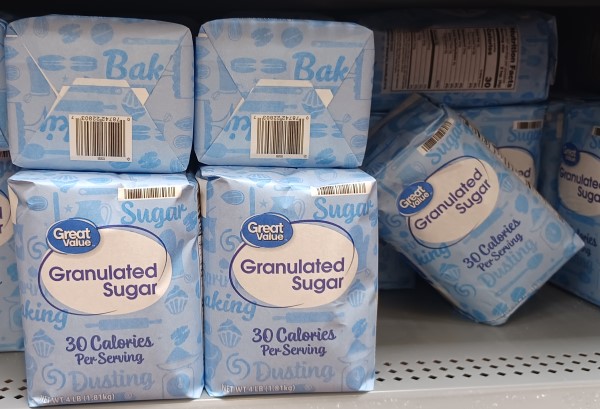
When I eat my bowl of oatmeal, I put  some sugar into the mix of fruits, and around 80% of sugar in the world is derived from a grass, sugarcane (Saccharum officinarum).
I walk out to my car, and I'll see suburban lawns stretching to the horizon, and the turf grass of course is a mix of various grass species. In Florida it would be Stenotaphrum secundatum (St. Augustine grass), Paspalum notatum (Bahia grass) and maybe Cynodon dactylon (Bermuda grass), while in the Northeast you get various mixes of Poa pratensis (Kentucky bluegrass), Festuca spp, and Lolium spp.

Such species are what people normally think of when you mention the word "grass" to them. Ornamental grasses also fall into this category of grasses that are used in landscaping.

When I drive my car to work, the ethanol in my gasoline tank is likely as not made from Zea mays. In fact, around 40% of all corn production is used as bioethanol!

During lunch, I might go out and get a burger, and where would that be without the bread that frames the delicious ingredients between them? Bread of course is from a grass that we call wheat,  (Triticum aestivum and its ilk).

Maybe I also eat some snacks for lunch, and if you are brave enough to look at the ingredients of your candy or chips, you'll probably find something called high fructose corn syrup in it. This is a very common ingredient of packaged foods, because it adds to the sweetness of the food, and this is of course derived from a grass that we already mentioned above, Zea mays (corn/maize).


In fact, if you live in the USA, your body is probably mostly derived from that single grass species. Here is a great documentary that explores in some depth the ubiquity of Z. mays in American life.  

Finally, during some part of the day, I'll probably eat rice (Oryza sativa) during either lunch or dinner (and sometimes breakfast too!). Rice is, of course, one of those grasses that have been essential in the creation and and molding of entire civilizations (which I'll look into next time).


And I'm not even including all the times we use bamboo implements and tools!

So no matter how you look at it, the family Poaceae is by far the most influential and important plant family in the world. It's grasses all day, every day, and grasses ever after, amen!

Friday, July 8, 2022

Ornamental Grass Hunting at the Big Box Stores (and Where Big Box Grasses Go to Die)

Leymus arenarius spikelets (taken using non-macro lens)

I am a big fan of ornamental grasses. 

In my time I have purchased many natives such as various Panicum virgatum cultivars ("Northwind",  "Thundercloud", "Heavy Metal", "Hot Rod"), Andropogon gerardii cultivars ("Black Hawk", "RainDance"), and even a few Schizachyrium scoparium like “Twilight Zone”. I even have potential invasives like Miscanthus sinensis "Morning Light" and Japanese Blood Grass (Imperata cylindrica), both of which I obtained a long time back before I knew they were considered iffy ornamentals.

Most of my purchases have been at specialized Garden Centers or from online, but every time I visit Lowe's or Home Depot, I make it a point to visit their Garden department in search of unusual grasses.

The typical store scatters the grasses across various sections, but Lowe's is a favorite of mine because some Lowe's stores even have an ornamental grass section!

You go, Lowe's!

On one trip to a New Jersey Lowe's I decided to list all the available ornamental grasses in the store. 

Most of the ornamental grasses were crowded into one bench, but there were still a few scattered here and there. The usual purple fountain grasses were available (Cenchrus setaceus/Pennisetum setaceum), as were varieties of Miscanthus sinensis ("Adagio", "Variegata"), and the really cute Festuca glauca (in this case, "Beyond Blue"). There were even pots of Cymbopogon citratus (Lemon grass), which normally is placed separately from other ornamentals. These are typical types for this region, as well as in Florida stores (especially the fountain grasses).

Interestingly enough, I did find a species that I normally don't see in New Jersey stores. A couple of pots had Cortaderia selloana (White Pampas Grass)!

An unusual Cortaderia selloana for sale

This species of course has been considered invasive for some time now, but it would be wrong to say it is not gorgeous when in full flower, and so it has been a favorite of lay gardeners in many places. I was surprised to see it here though, as  it usually grows better farther south.

But the species that really stopped me in my tracks was a row of Leymus arenarius. The grasses were in flower, and the blue green hue of the leaves of this native species made me love it on sight. It's safe to say that I will likely get this sand-loving grass in future if I have space for it in my new home.

Leymus arenarius - beautiful in blue

On the way back to my car, I saw some clearance racks that had been parked to the side of the store. Curious about what I would find, I walked closer and found myself staring at the dying and drying bodies of various potted grass specimens. 

Where box store grasses go to die

Most of the dried up plants had grown long, their limp blades obscuring the name tags. I peered closely and found that many of them were Calamagrostis spp, with a couple of Miscanthus sinensis cultivars thrown in and a lone Muhlenbergia sp. A few still had green blades poking up through the mass of dried gold, and I knew that these could still be saved.

When I asked some store reps about the items, they said those plants were going be thrown away if no one bought them at clearance. It seems too many were in stock, and most had deteriorated due to negligence and poor lighting. 

I left after awhile, feeling a bit sad for the dying grasses. There should be a way to calculate the correct stock, and a way to take better care of these ornamental plants.